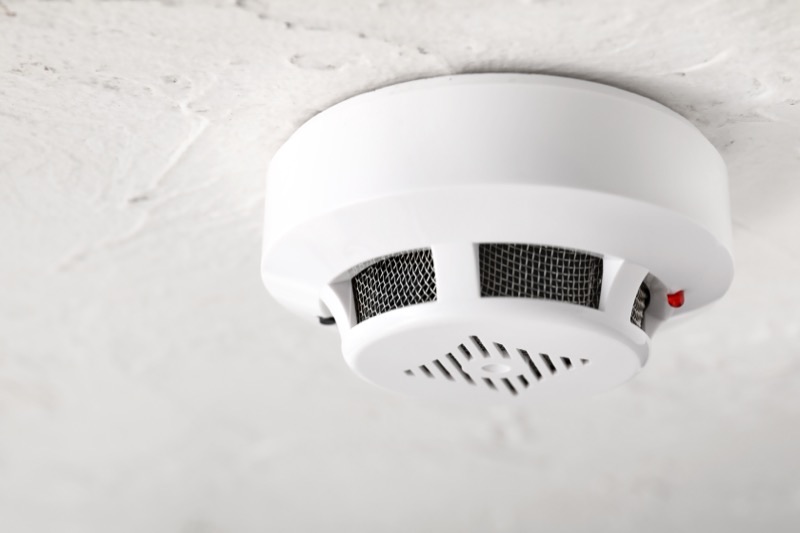

Smoke detectors have a lifespan. It doesn't matter if they still chirp when you press the test button — the sensing technology inside degrades over time, and a detector that passes a button test can still fail to detect real smoke. NFPA 72 sets clear replacement timelines, and ignoring them puts lives at risk.
The 10-Year Rule
NFPA 72 requires smoke detectors (both alarms and system detectors) to be replaced when they reach 10 years from the date of manufacture. Not 10 years from installation — 10 years from manufacture.
This applies to:
- Battery-only smoke alarms
- Hardwired smoke alarms
- System smoke detectors connected to a fire alarm control panel
The 10-year replacement rule exists because the sensing chamber degrades. Radioactive sources in ionization detectors decay. Photoelectric chambers accumulate microscopic contamination that calibration can't correct. The detector slowly becomes less sensitive, and there's no practical field test that catches this gradual decline with certainty.
How to Check the Manufacture Date
Every smoke detector has a date printed or stamped on the unit. Here's where to find it:
- Remove the detector from its mounting plate — twist counterclockwise for most residential units
- Check the back or side of the unit — look for a label with the manufacture date, often formatted as "MFG DATE: MM/YYYY" or just a month and year
- If you can't find a date — the detector is old enough that it used a different labeling standard. Replace it
For commercial system detectors, the date is usually printed on the detector base or body. Your fire alarm contractor can pull this information during a routine inspection.
Ionization vs. Photoelectric: Does the Type Matter?
Yes. These two technologies detect different types of fires, and understanding the difference helps you make the right replacement decision.
Ionization Smoke Detectors
- How they work: A small amount of radioactive material (Americium-241) ionizes air inside the chamber. Smoke particles disrupt the ion flow, triggering the alarm
- Best at detecting: Fast-flaming fires (paper, grease, accelerants)
- Weaknesses: Slow to respond to smoldering fires. Prone to nuisance alarms from cooking and steam
- Replacement: 10 years from manufacture. The radioactive source decays, reducing sensitivity over time
Photoelectric Smoke Detectors
- How they work: An LED shines a light beam inside the chamber. Smoke particles scatter the light onto a photosensor, triggering the alarm
- Best at detecting: Smoldering fires (overheated wiring, cigarettes, fabric)
- Weaknesses: Slightly slower to respond to fast-flaming fires
- Replacement: 10 years from manufacture. The LED and photosensor degrade with age and contamination
Which Should You Install?
NFPA 72 doesn't mandate one type over the other, but many fire safety experts recommend photoelectric detectors or combination (dual-sensor) units for most applications. Photoelectric detectors cause fewer nuisance alarms and respond faster to the smoldering fires that produce the most fatalities (because they generate toxic smoke before producing visible flames).
| Feature | Ionization | Photoelectric | Combination |
|---|---|---|---|
| Fast-flaming fires | Excellent | Good | Excellent |
| Smoldering fires | Poor | Excellent | Excellent |
| Nuisance alarms (cooking) | Frequent | Rare | Moderate |
| Nuisance alarms (steam) | Frequent | Occasional | Moderate |
| Cost per unit | $15-$25 | $20-$35 | $30-$50 |
| Best use | Limited applications | Most residential/commercial | Where budget allows |
Hardwired vs. Battery-Only Replacement
Battery-Only Smoke Alarms
- Replace the entire unit every 10 years
- Replace batteries annually (or when the low-battery chirp sounds)
- Sealed 10-year lithium battery units eliminate annual battery changes but still need replacement at 10 years
Hardwired Smoke Alarms
- Same 10-year replacement rule for the detector head itself
- The wiring and mounting plate typically remain — you're replacing the detector unit, not the infrastructure
- When replacing, match the wiring connector type (most are interchangeable within a brand, but not always across brands)
- Hardwired units with battery backup need the backup battery replaced according to the manufacturer's schedule
System Detectors (Commercial)
- Connected to a fire alarm control panel via a dedicated circuit
- 10-year replacement applies, but sensitivity testing under NFPA 72 can extend or shorten the timeline
- If a detector fails sensitivity testing (responds outside the manufacturer's listed range), it must be replaced regardless of age
- Some manufacturers offer replacement programs where detectors that pass sensitivity testing at the 10-year mark can continue in service — check with your contractor
Signs Your Smoke Detector Needs Replacement Now
Don't wait for the 10-year mark if you notice these warning signs:
- Frequent false alarms without an obvious cause — if the detector is clean and properly placed, frequent false alarms usually mean the sensing chamber is degraded
- Yellow discoloration — UV exposure and age cause the plastic housing to yellow. This is cosmetic, but it's a reliable age indicator
- Failed sensitivity test — during a professional inspection, detectors that respond outside the acceptable sensitivity range must be replaced
- Chirping that persists after battery replacement — the detector's internal circuitry may be failing
- Physical damage — cracks, missing covers, or detectors that have been painted (painting a detector voids it — see our placement guide)
- After a fire event — any detector that has been exposed to heavy smoke, heat, or water during an actual fire or suppression activation should be replaced
Commercial Replacement Schedules
Commercial buildings follow the same 10-year replacement rule, but with additional requirements:
- Annual sensitivity testing is required under NFPA 72 Chapter 14. Detectors that drift out of the manufacturer's listed sensitivity range must be replaced or recalibrated
- Detector technology upgrades — when replacing, consider upgrading from conventional to addressable detectors if your fire alarm panel supports it. Addressable detectors report their individual sensitivity readings to the panel, making ongoing monitoring easier
- Documentation — all replacements must be recorded in the system's maintenance log, and the panel programming must be updated to reflect new device addresses
- Batch replacement — in large buildings, replacing all detectors of the same age/type at once is more cost-effective than replacing them one at a time as they fail
What Replacement Costs
| Scenario | Typical Cost |
|---|---|
| Residential smoke alarm (per unit) | $25-$50 installed |
| Residential whole-house (8-12 units) | $200-$500 |
| Commercial system detector (per head) | $75-$150 per device |
| Commercial bulk replacement (50+ heads) | $50-$100 per device |
| Panel reprogramming (if changing to different model) | $200-$500 |
For commercial buildings, detector replacement is usually handled as part of your annual maintenance contract. Your contractor should give you advance notice as detectors approach the 10-year mark so you can budget for it.
Take Action
If you don't know when your smoke detectors were manufactured — or if you know they're past 10 years — it's time to replace them. For residential homes, this is a hardware store trip and a Saturday afternoon. For commercial buildings with fire alarm systems, replacement should be coordinated with your fire alarm contractor to ensure proper programming and documentation.
Request a free site survey and we'll check the age and condition of every detector in your system, test sensitivity where applicable, and give you a replacement plan with clear pricing.